Jakob Braun · 5 September 2026
Perchmill Brook's Rare Bird Findings Inspire Fresh Environmental Monitoring Efforts Across Nearby Fields
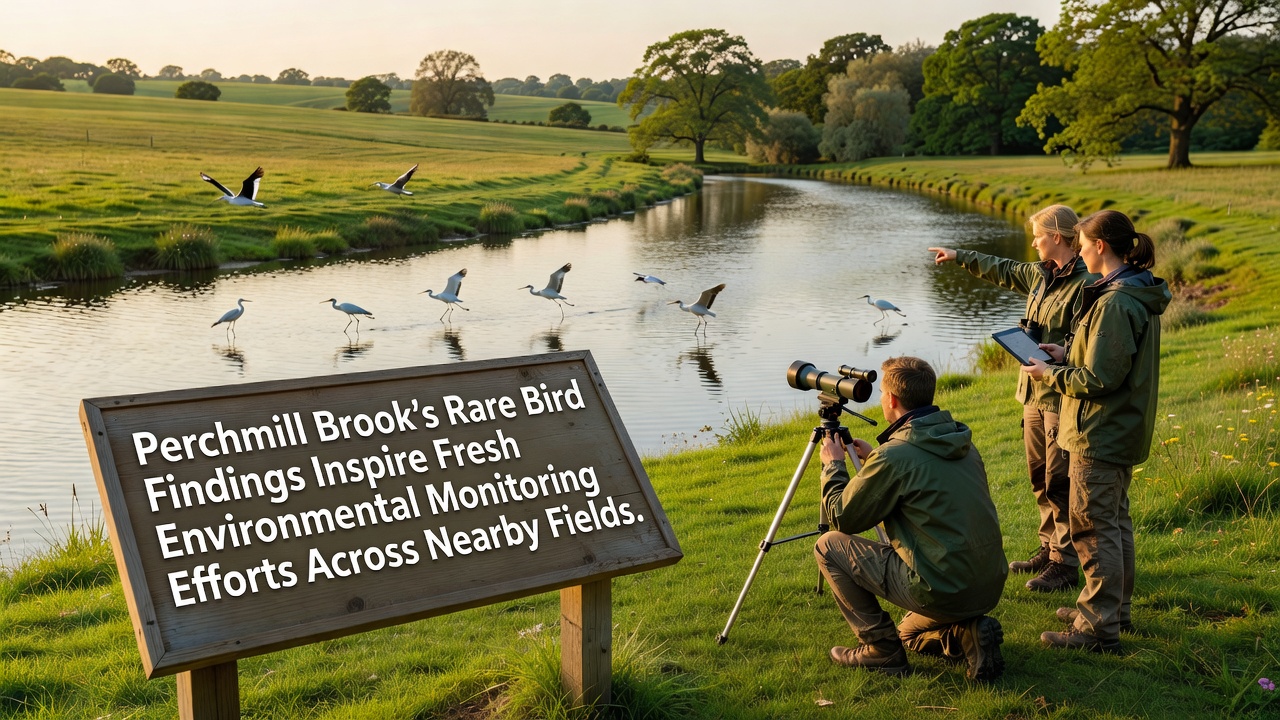
Recent surveys along Perchmill Brook have documented several rare bird species, and those observations have led directly to expanded environmental monitoring programs in the fields that border the waterway. Local wildlife groups coordinated the initial fieldwork throughout spring and early summer, recording sightings of species that had not appeared in county records for more than two decades. The data, once compiled, showed clear patterns of habitat use that extend beyond the brook itself into adjacent agricultural land and hedgerows.
Documented Species and Survey Methods
Researchers employed a combination of point-count surveys, acoustic monitoring stations, and motion-triggered cameras to gather evidence across a two-kilometer stretch of the brook. Among the confirmed records were breeding pairs of the lesser spotted woodpecker along with transient visits from the Eurasian curlew and occasional appearances of the marsh harrier. These findings emerged from systematic counts conducted at dawn and dusk over twelve weeks, and cross-checks with regional databases verified that several of the individuals represented first local breeding attempts since the late 1990s.
Counts also revealed increased activity from willow warblers and reed buntings in the same zones, while numbers of more common species such as blackbirds and robins remained stable. Observers noted that the rare species concentrated their activity in areas where field margins had been left uncut for at least two seasons, suggesting a direct link between reduced mowing intensity and habitat suitability.
Expansion of Monitoring Across Nearby Fields
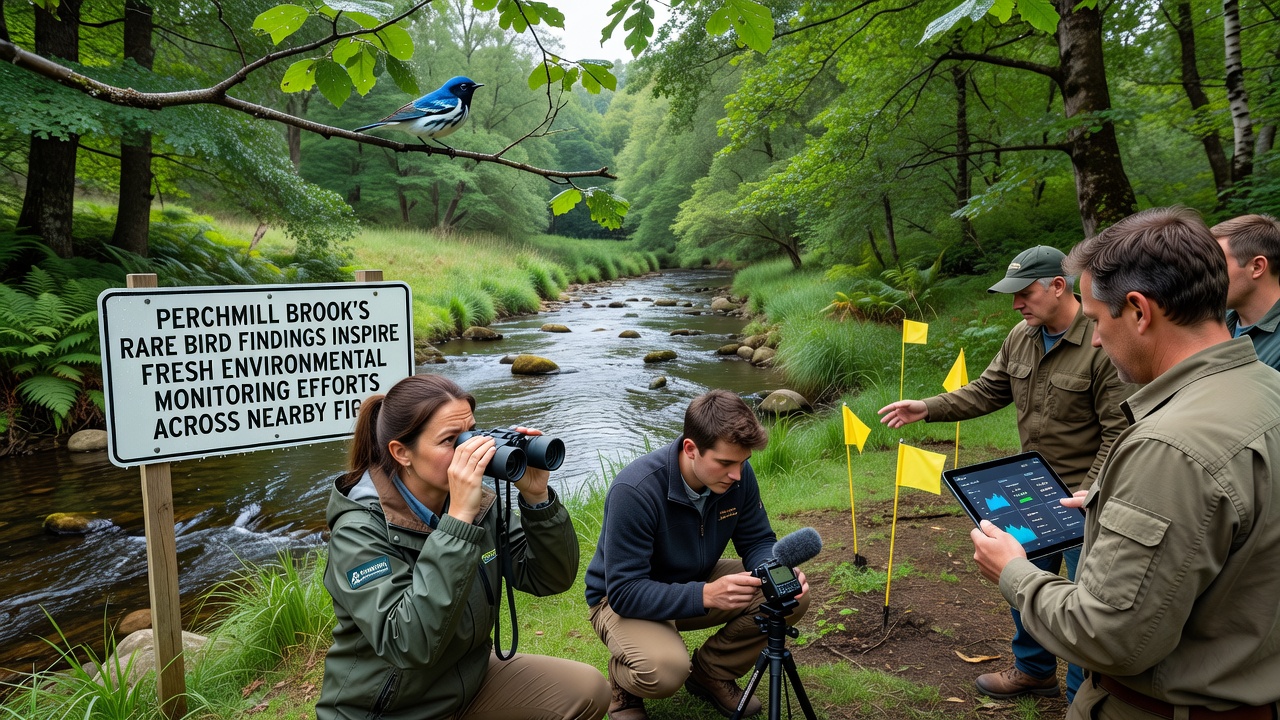
Following the release of the survey report in late August, the parish council allocated resources for additional monitoring stations to be installed in three fields immediately east of the brook. Equipment includes automated sound recorders and weatherproof camera traps positioned along existing footpaths to minimize disturbance. Fieldworkers have begun weekly visits to download recordings and replace batteries, with the first full dataset scheduled for analysis before the end of the year.
Cooperation between landowners and ecologists has allowed access to previously restricted areas, and several farmers have adjusted cutting schedules on strips adjacent to the brook to support continued observations. The adjustments align with existing agri-environment schemes, yet the new focus on rare bird presence has prompted tighter timing windows around nesting periods.
September 2026 Launch of Coordinated Program
Plans call for a larger-scale rollout beginning in September 2026, when additional sensors will be deployed across a broader area that includes both sides of the brook and two further fields to the west. The schedule coincides with the start of the autumn migration window, allowing comparison between resident and passage species under consistent methodology. Funding for the September phase comes from a combination of local authority grants and contributions from regional conservation trusts, with equipment purchases already approved.
Training sessions for volunteer observers are listed to begin in early autumn, covering identification of key calls and handling of recording devices. Participants will follow standardized protocols developed in consultation with ornithological specialists, and results will feed into a shared online repository accessible to both researchers and participating landowners.
Links to Broader Conservation Data
Findings from Perchmill Brook fit into wider patterns tracked by national and international bodies. Data compiled by the Royal Society for the Protection of Birds indicate similar increases in certain woodland and wetland species where field-edge management has been relaxed. Comparable trends appear in reports from Environment and Climate Change Canada, which document parallel responses among migratory shorebirds when buffer zones remain undisturbed during breeding and stopover periods.
Conclusion
The sequence of rare bird detections along Perchmill Brook has therefore translated into concrete next steps for monitoring across neighboring fields, with equipment installation and volunteer coordination already underway. The September 2026 expansion will test whether the initial patterns hold over a larger area and across seasonal shifts, supplying a longer record that can inform both local land-use decisions and regional conservation planning. Ongoing data collection continues to map exactly where and when the documented species return, building a factual baseline for any future habitat adjustments.